Introduction
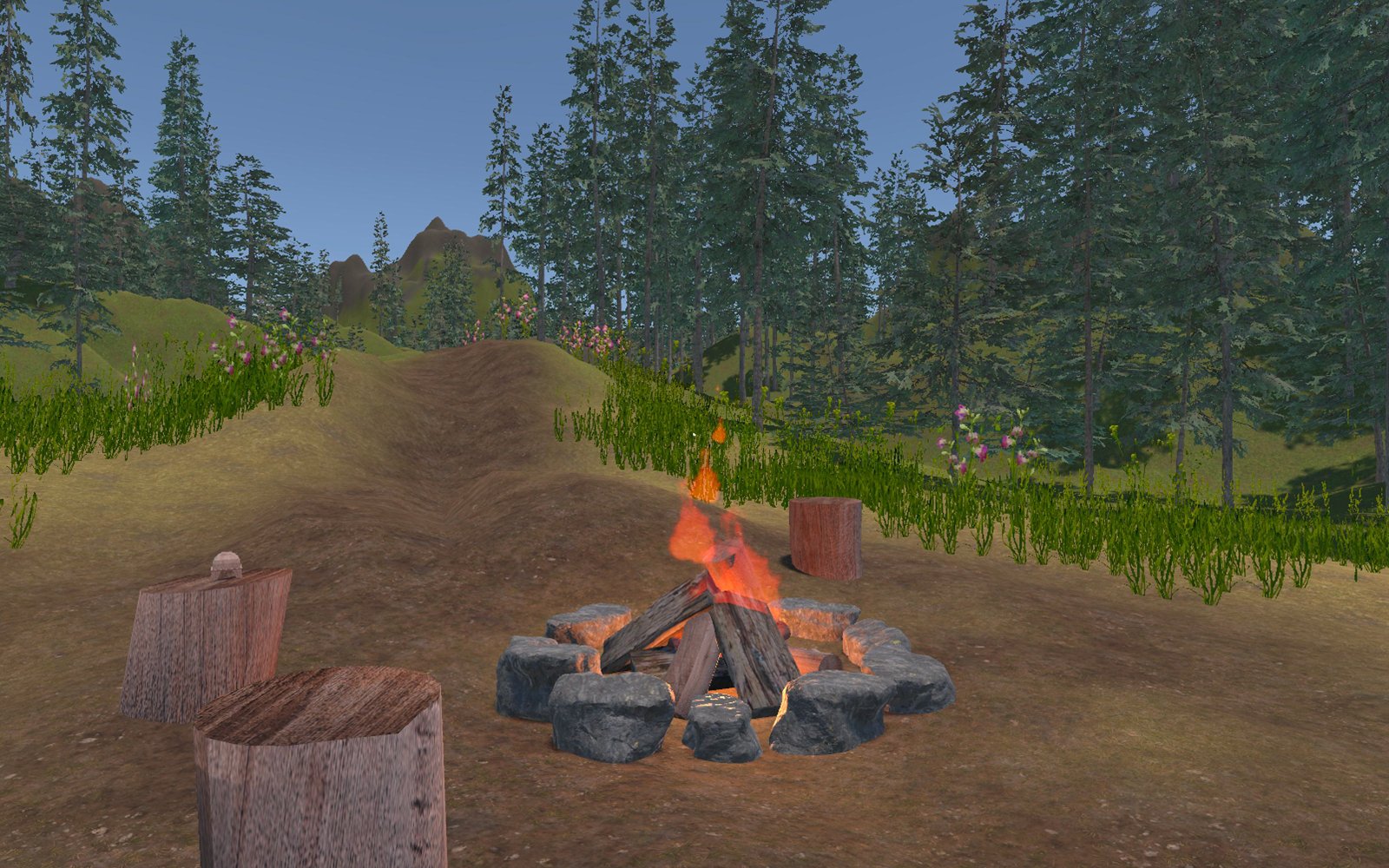
The user finds themselves in front of a fire and is greeted by the voice of the shaman, the guiding figure who initiates them into the journey.
Avrora is a virtual reality experience for Meta Quest 2 that uses biofeedback to strengthen the user's connection with nature. In a group of four, I worked on 3D modeling, scripting and the testing protocol.
Problem
The brief had two parts: developing a virtual reality experience set in a natural environment, and integrating BITalino sensors to read, record and transmit the biofeedback data the environment responds to.
We directed both toward nature connectedness, an aim that matters most for people with reduced mobility, who cannot easily reach natural spaces.
Solution
A shaman's voice guides the user through a landscape and a narrative inspired by Inuit culture. Breathing moves the surrounding trees, and under the aurora the user hears their own heartbeat.
The narrative aims to elicit calm and mindfulness and to lead to self-transcendent experiences (Glowacki et al., 2022), in which the boundary between self and environment blurs.
Journey
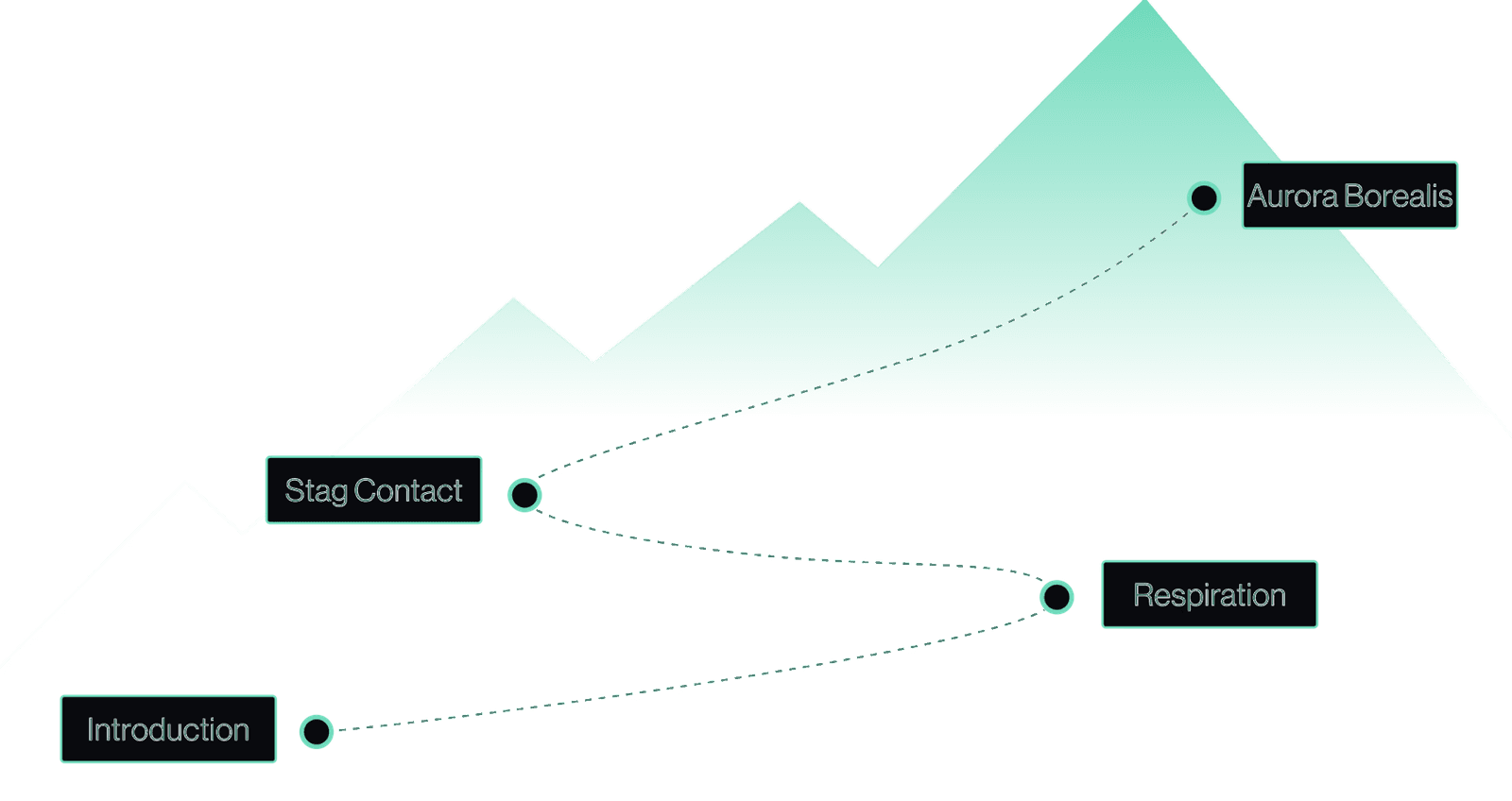
The user finds themselves in front of a fire and is greeted by the voice of the shaman, the guiding figure who initiates them into the journey.
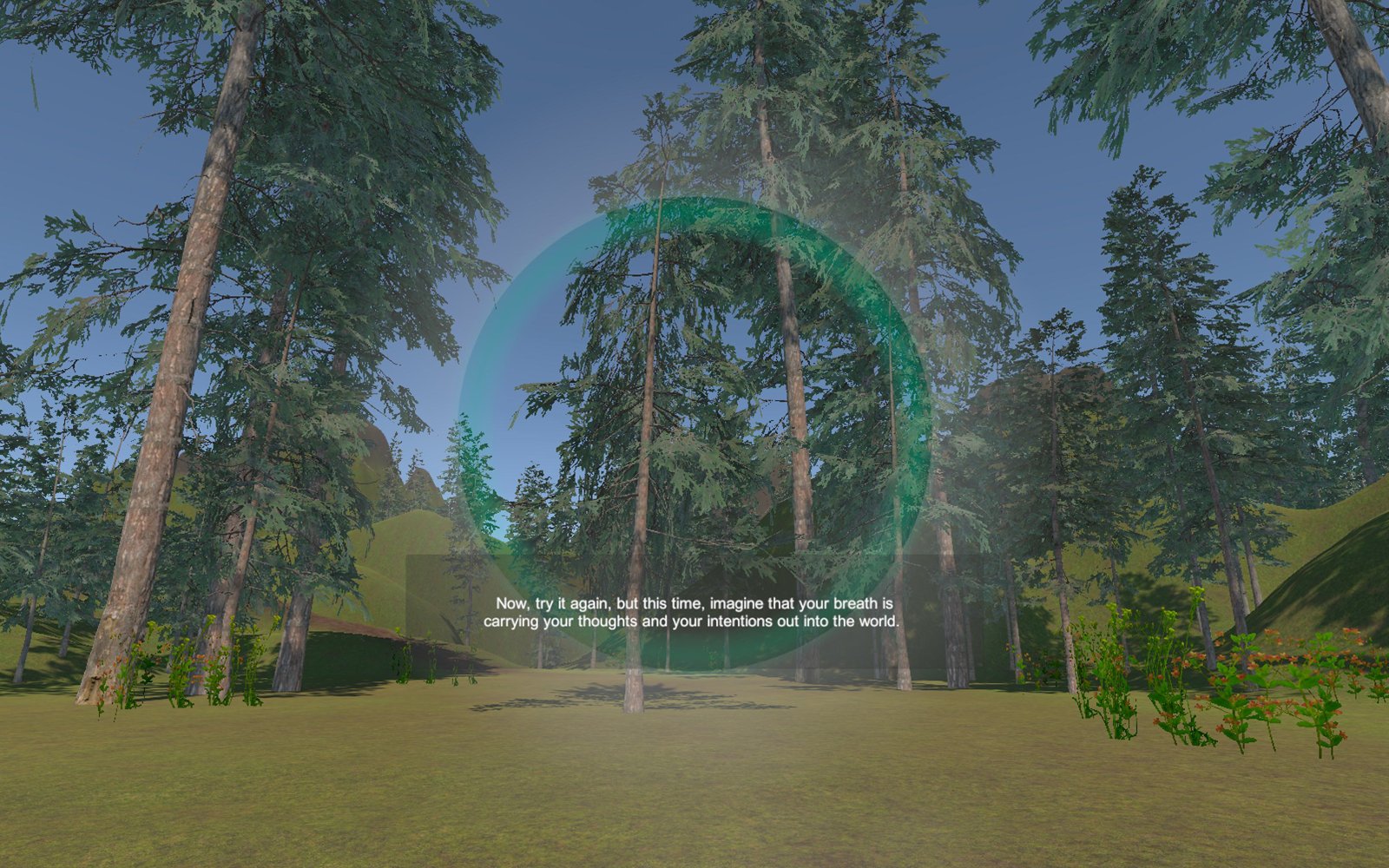
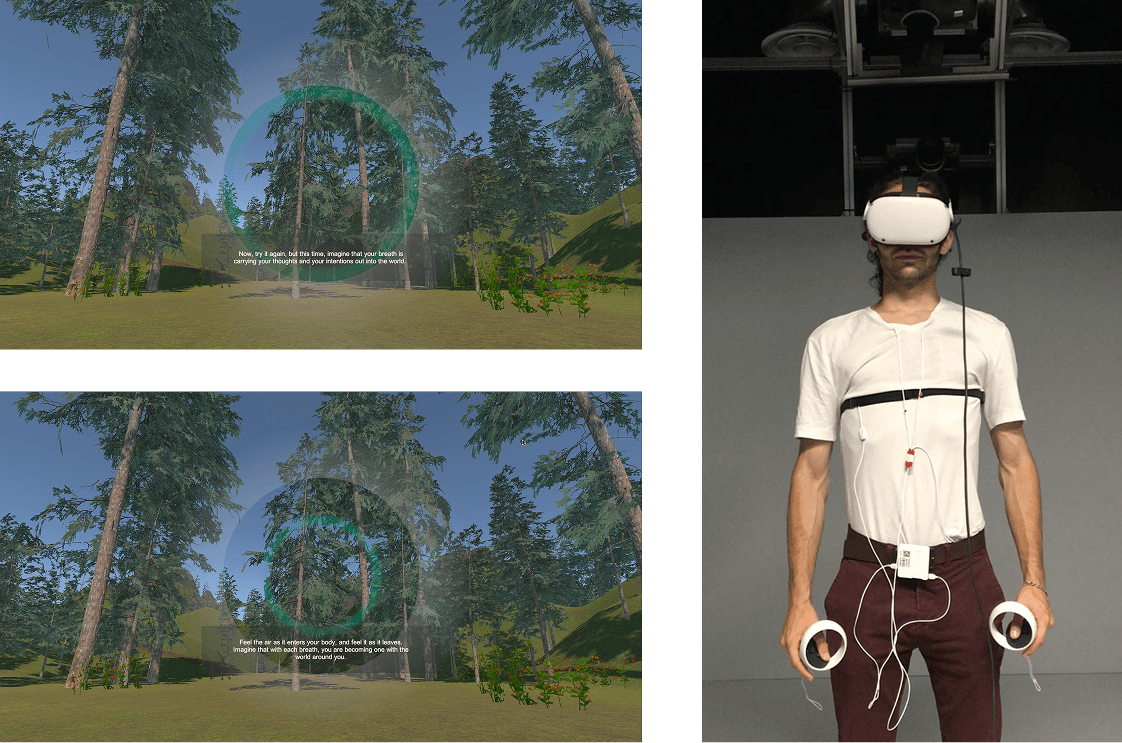
The user aligns their breathing with a guiding circle. The trees follow each breath, bending inward on inhalation and outward on exhalation.
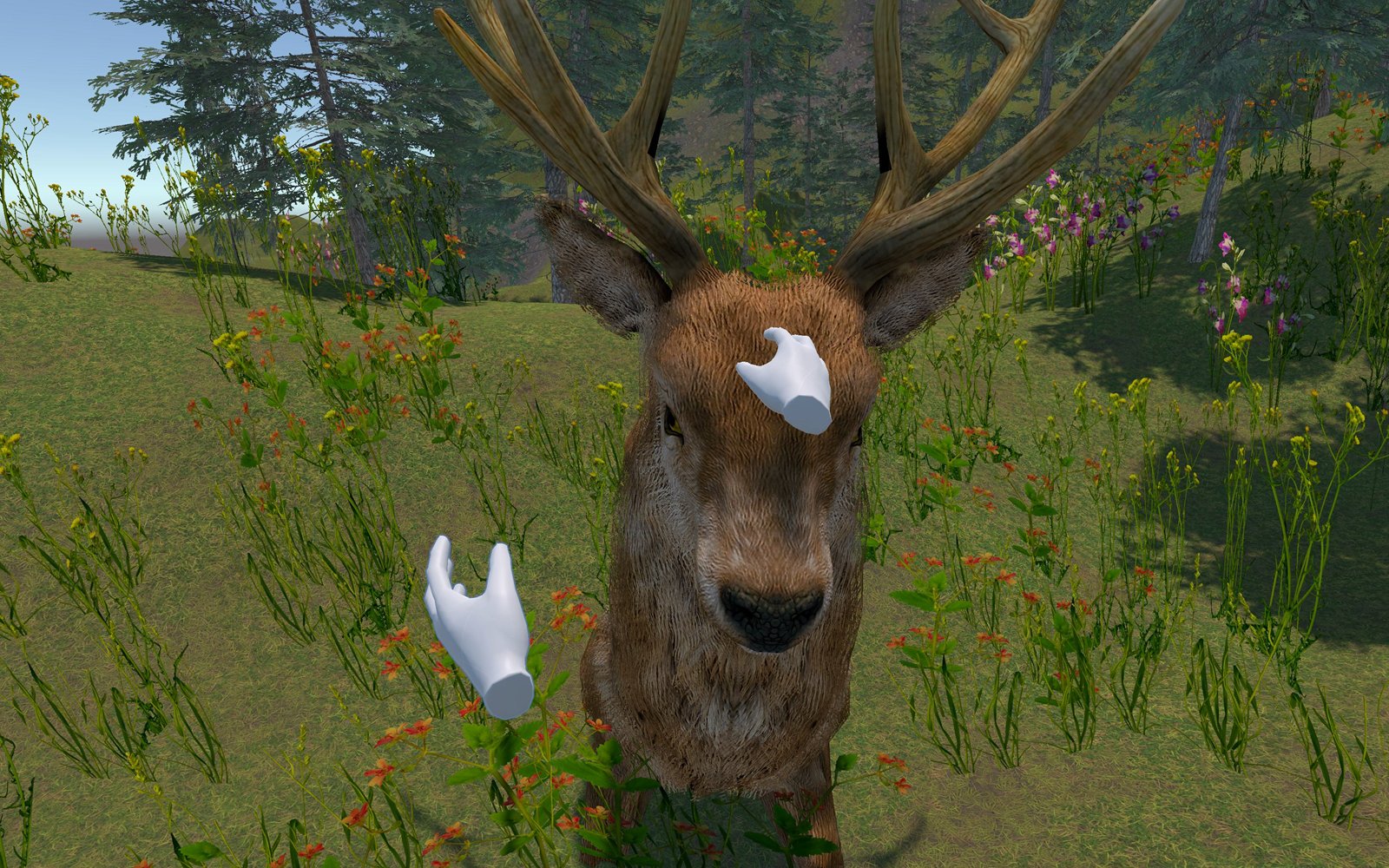
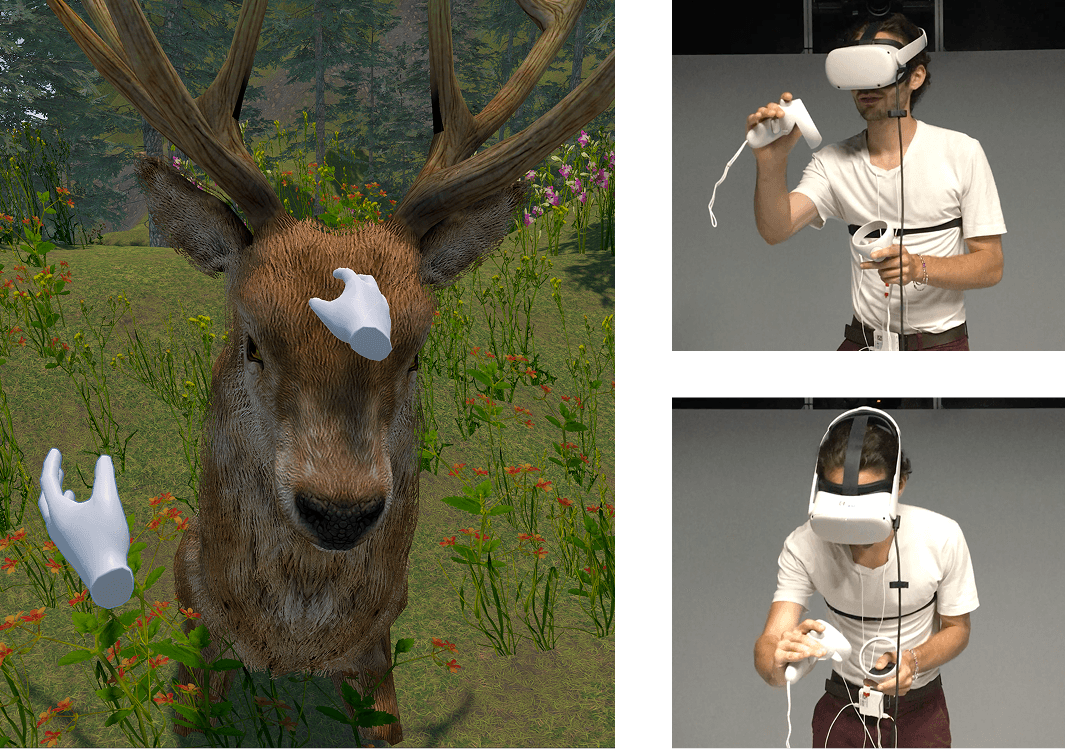
A deer approaches. Gently stroking its head tames it, while getting too close to the antlers makes it react abruptly and become agitated.
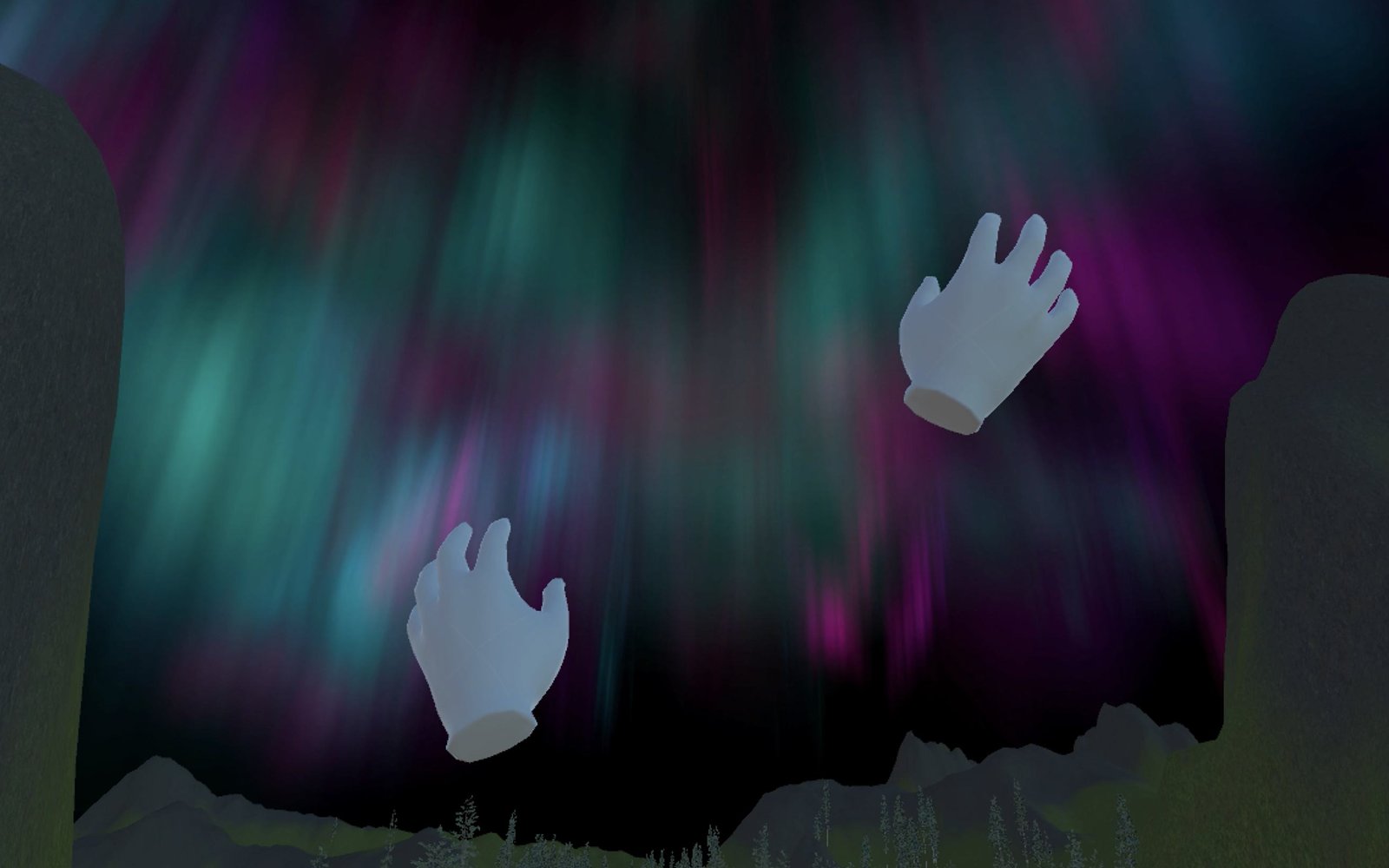
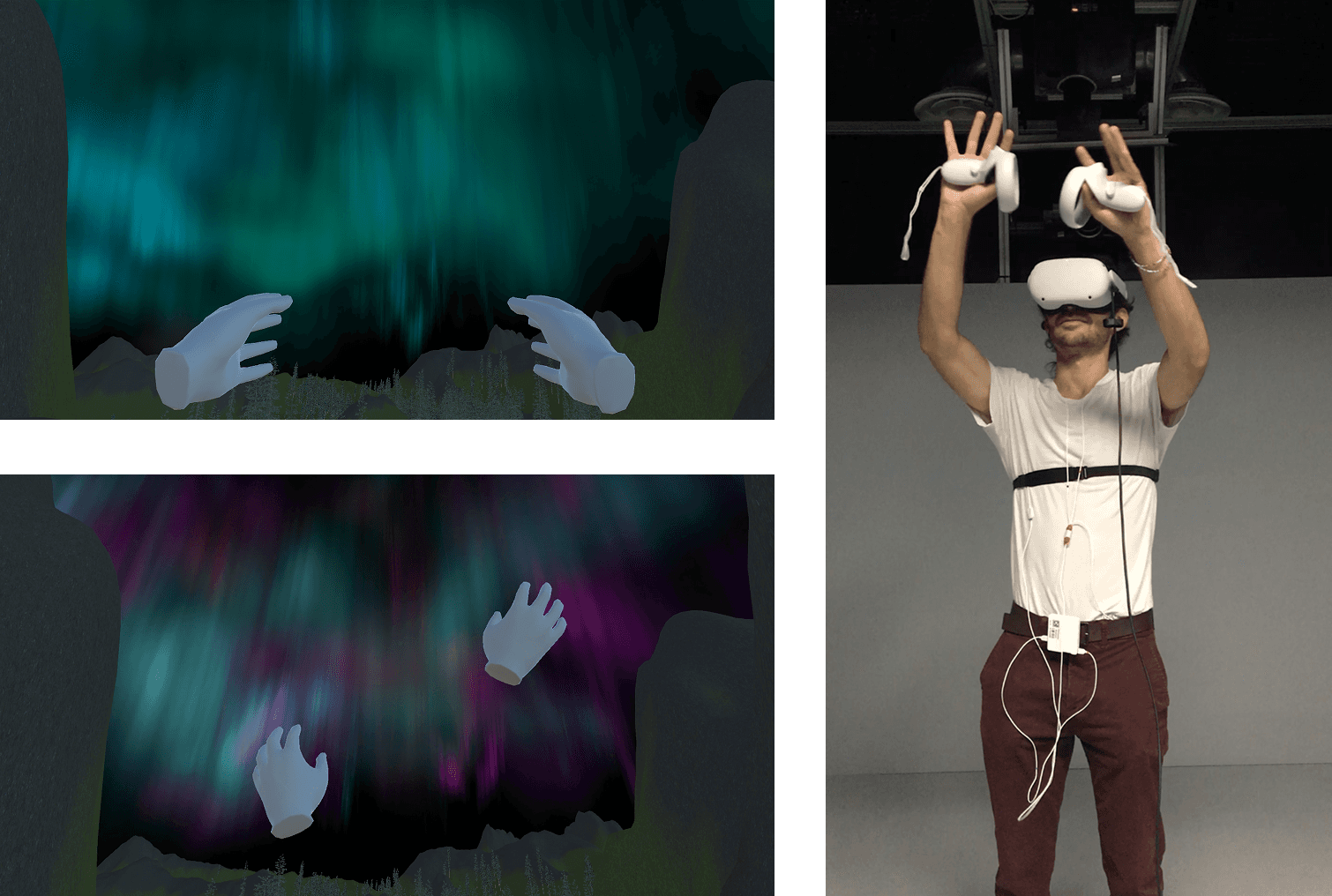
At the mountaintop, hand movements shift the aurora from bluish green to fuchsia. The user hears their own heartbeat, the sign of their final connection with the world.
System
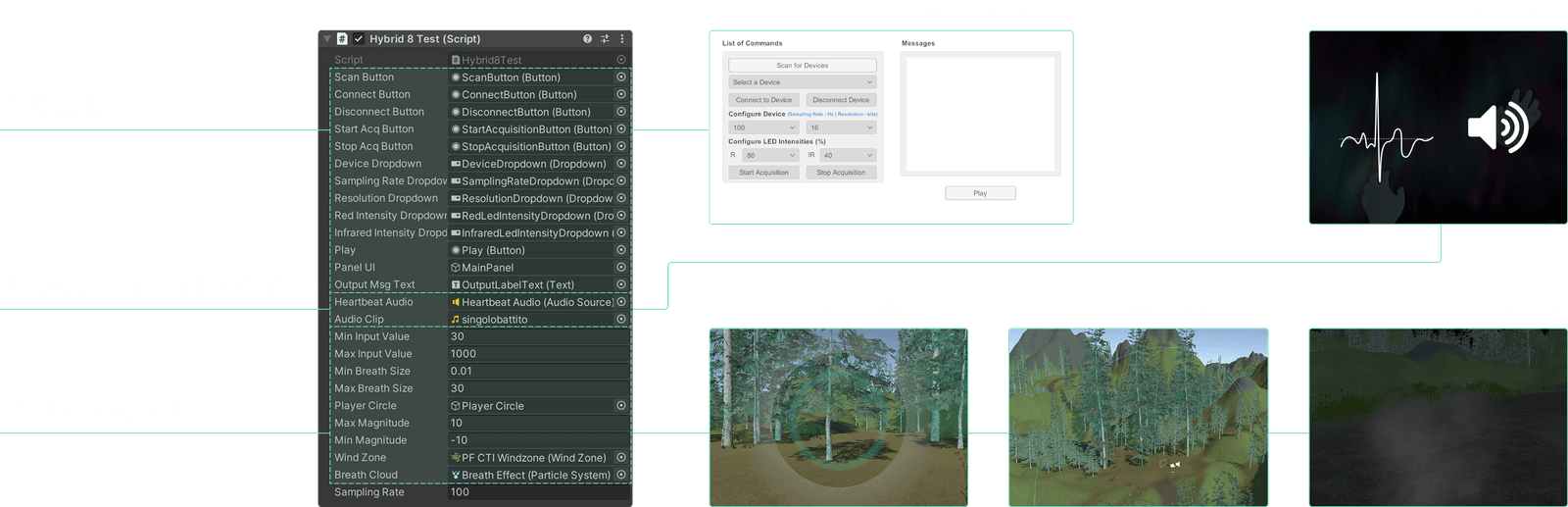
Hybrid8Test, a script in Unity, controls every interaction with the BITalino sensors, from the connection panel to the ECG and respiration signals. The other systems respond to the player's movement and position.
Testing
Eleven people tested Avrora and completed a questionnaire before and after the experience. Six had already tried VR and five had not. Their average connection with nature went from 6.5 to 8.7 out of 10.
Observation of the tasks and the questionnaires showed which interactions worked and where the design needs another iteration.
Looking back
The project aimed at three values: breathing practice, calm and mindfulness, and nature connectedness. With 11 testers, the questionnaires give an encouraging first indication on connectedness and immersion. The breathing task still needs work, and calm would require a dedicated measurement.
The issues suggest the next steps: clearer directions for the breathing task, a smoother respiration signal, a wider range of valid positions around the deer, a lower movement threshold for the aurora and a more gradual start to the experience. The project also taught me to manage hardware and software integration while keeping the person wearing the headset at the center of the design.